What is Sasando ?
Sasando is a stringed musical instrument or cordophone type musical instrument. It comes from the island of Rote, East Nusa Tenggara Indonesia. The most southern island in Indonesia archipelago. (My father in law was born in this island)
Sasando word comes from Rote word sasandu. It means vibrant instrument
Sasando form is similar to other stringed instruments such as guitar, violin and harp.
Sasando
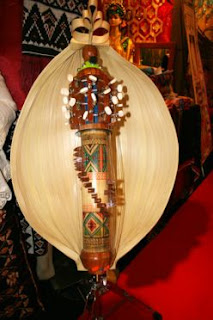
The
main part of the long tubular Sasando commonly made from bamboo. Then
in the middle, circling from top to bottom is placed some lumps in which
the strings that stretched across the tube, from top to bottom resting.
The wedge gives different tone to each passage of the string. Then
this Sasando tube placed in a container made from a kind of woven palm
leaves (Lontar leaves ) like a fan made. This container is the place of
Sasando resonance
The composition of the notation is irregular
and you can not see it because it is wrapped. Sasando is played with
both hands from the opposite direction. From left to right and left to
right. Left hand plays the melody and bass, while right hand plays the
accord. That makes Sasando unique because somebody could play the
melody, bass, and accord at once. And the harmony is awesome.
Sasando's
sound is very unique. Compare to guitar, Sasando's sound is more
various. Sasando has 28 strings and it hard to play. Sasando player
should have the ability to combine and make the right rythm and feeling
from the whole strings.
Rote Island, East Nusa Tenggara. Indonesia
The History of Sasando
Ana
Sanggu created the early shape of Sasando in the 15th century on a
small island near the island of Rote, the Dana Island , which then
controlled by the Taka La'a King. Sanggu is citizen on the island of
Nusa Ti'i Southwest Rote. He was arrested by the King when stranded on
the island while searching for fish with his friend, Mankoa. In addition
to a fisherman, Sanggu also an artist.
The King at that time had
a daughter. Princess in love with Sanggu. To Sanggu, the Princess
requests for a new instrument created by Sanggu that could entertain
people. Princess likes to entertain people when the moon is full.
Sanggu
then created the Sari Sando, an instrument that is vibrating when
picked. As with seven ropes made from wooden roots. The Princess
relationship with Sanggu was discovered by King . The King Taka La'a was
furious and executed Sanggu.
Sanggu mate who could run away,
Mankoa, reported it to the Nusa Ti'i. Sanggu's son in Ti'i, Nale Sanggu,
angry at his father died. Nale revenge with 25 knights Ti'i. He
destroyed the whole Dana island, only the children and musical
instruments Sasando inherited from his father who rescued to Ti'i.
In
Ti'i, Sasando was modified, the string added to nine. "The music only
consist of five notes mi, sol, la, do, re. Si and fa did not exist.
In
the Dutch period, 18th century, the number of strings added to 10
strings. After independence again amended by adding a string to 11
string. In the 19th century, Sasando (Sasando haik) was modified into a
violin by Ti'i son named Kornelis Frans. Called
Sasando violin because when it created the tone is adjusted like the
violin tone. Number of ropes become 39 pieces and the main tone become 7
notes.
A man wearing Tiilangga (traditional hat) with Sasando beritadaerah.com
Type of Sasando
Sasando Engkel : Sasando that has 28 strings
Sasando Dobel : Sasando that has 56 strings, some type has 84 strings.
Sasando Gong (Sasando Haik)
Sasando Biola (Violin Sasando)
Bengawan Solo Sasando Cover (Video)


 The
main part of the long tubular Sasando commonly made from bamboo. Then
in the middle, circling from top to bottom is placed some lumps in which
the strings that stretched across the tube, from top to bottom resting.
The wedge gives different tone to each passage of the string. Then
this Sasando tube placed in a container made from a kind of woven palm
leaves (Lontar leaves ) like a fan made. This container is the place of
Sasando resonance
The
main part of the long tubular Sasando commonly made from bamboo. Then
in the middle, circling from top to bottom is placed some lumps in which
the strings that stretched across the tube, from top to bottom resting.
The wedge gives different tone to each passage of the string. Then
this Sasando tube placed in a container made from a kind of woven palm
leaves (Lontar leaves ) like a fan made. This container is the place of
Sasando resonance

